L’investissement dans un immeuble à revenus demeure l’une des méthodes les plus éprouvées pour créer de la richesse à long terme. Cette approche permet de générer des revenus passifs tout en bénéficiant de l’appréciation du capital. Chez Murray Immeuble, nous guidons les investisseurs vers des acquisitions rentables et durables.
Pourquoi choisir l’immobilier locatif
L’immobilier locatif offre plusieurs avantages distinctifs par rapport aux autres formes d’investissement. Les revenus de loyer procurent un flux de trésorerie régulier et prévisible. La valeur de la propriété tend à augmenter avec le temps, surtout dans les marchés en croissance. De plus, les intérêts hypothécaires et plusieurs dépenses liées à la propriété sont déductibles d’impôt.
Le principe de l’effet de levier permet d’acquérir un actif important avec une mise de fonds relativement modeste. Vos locataires contribuent essentiellement au remboursement de votre hypothèque, ce qui accélère la constitution de votre équité.
Contrairement aux placements boursiers, l’immobilier vous donne un contrôle direct sur votre investissement. Vous pouvez améliorer la propriété, optimiser la gestion et influencer directement sa rentabilité.
Analyser la rentabilité potentielle
Avant d’acheter un immeuble à revenus, effectuez une analyse financière rigoureuse. Le taux de capitalisation, calculé en divisant le revenu net d’exploitation par le prix d’achat, vous indique le rendement potentiel de l’investissement. Un taux entre 4 % et 8 % est généralement considéré acceptable selon le marché et le niveau de risque.
Le multiplicateur de revenus bruts offre une autre perspective. Il s’obtient en divisant le prix d’achat par les revenus bruts annuels. Plus ce chiffre est bas, plus l’immeuble génère de revenus par rapport à son coût.
N’oubliez pas d’inclure toutes les dépenses dans vos calculs. Les taxes municipales et scolaires, les assurances, l’entretien, les réparations, la gestion, les frais de chauffage et le taux d’inoccupation prévu doivent être comptabilisés. Les experts de Frederic Murray Properties peuvent vous aider à évaluer ces paramètres avec précision.
Choisir le bon type d’immeuble
Les duplex et triplex constituent souvent un excellent point de départ pour les nouveaux investisseurs. La stratégie d’habiter l’un des logements tout en louant les autres permet de bénéficier de conditions de financement avantageuses réservées aux propriétaires occupants.
Les immeubles de quatre à six logements offrent une meilleure économie d’échelle. Les coûts fixes comme le déneigement, l’entretien du terrain et certaines réparations se répartissent sur plusieurs unités, améliorant ainsi la rentabilité globale.
Les immeubles de plus grande taille requièrent une expertise accrue et un financement commercial, mais génèrent des revenus plus substantiels. Cette catégorie convient aux investisseurs expérimentés ou à ceux qui s’associent avec des partenaires qualifiés.
L’emplacement fait toute la différence
Un immeuble bien situé attire des locataires de qualité et maintient un faible taux d’inoccupation. Recherchez la proximité des transports en commun, des commerces, des écoles et des services. Les quartiers en revitalisation offrent parfois d’excellentes occasions d’achat avec un potentiel d’appréciation supérieur.
Étudiez les tendances démographiques et économiques de la région. Une population croissante, des employeurs majeurs stables et des projets d’infrastructure annoncés sont des indicateurs positifs pour la demande locative future.
Les ressources de Frederic Murray Estates incluent des analyses de marché détaillées pour vous aider à identifier les secteurs les plus prometteurs.
Gérer efficacement son investissement
La gestion d’un immeuble à revenus demande du temps et des compétences variées. La sélection rigoureuse des locataires, la collecte des loyers, la coordination des réparations et le respect des obligations légales font partie des responsabilités du propriétaire.
Plusieurs investisseurs choisissent de confier cette gestion à des professionnels. Les services de Frederic Murray Management offrent une prise en charge complète qui vous libère des tâches quotidiennes tout en maximisant le rendement de votre propriété.
Que vous gériez vous-même ou déléguiez cette responsabilité, maintenez une réserve financière pour les imprévus. Les réparations majeures, les périodes de vacance et les mauvaises créances peuvent survenir. Une réserve équivalant à trois à six mois de dépenses vous protège contre ces aléas.
L’équipe de Murray Immeuble possède l’expertise nécessaire pour vous accompagner dans la recherche, l’analyse et l’acquisition de votre prochain immeuble à revenus. Communiquez avec nous pour discuter de vos objectifs d’investissement.
Successful real estate investing requires more than intuition and optimism. Professional investors rely on systematic evaluation methods that separate profitable opportunities from money pits. Mastering these analytical techniques empowers you to make confident decisions backed by solid data rather than emotional impulses.
Understanding Cash Flow Fundamentals
Cash flow represents the lifeblood of rental property investment. Positive cash flow occurs when rental income exceeds all property-related expenses, leaving money in your pocket each month. Negative cash flow drains your resources and can transform promising investments into financial burdens.
Calculate potential cash flow by starting with realistic rental income estimates. Research comparable properties in the target neighborhood to establish market rates. Avoid relying solely on seller-provided projections, as these often reflect optimistic assumptions rather than achievable results.
Subtract all operating expenses from projected income to determine net operating income. These expenses include property taxes, insurance, maintenance reserves, property management fees, utilities you cover, and vacancy allowances. Professional investors at Murray Immeuble typically budget five to ten percent of gross rent for vacancy even in strong markets, recognizing that turnover inevitably occurs.
Finally, subtract your mortgage payment including principal and interest to arrive at monthly cash flow. Properties generating at least 100 to 200 dollars monthly cash flow per unit provide adequate cushion against unexpected expenses while building long-term wealth.
Calculating Cap Rate for Quick Comparisons
Capitalization rate, commonly called cap rate, provides a standardized metric for comparing investment properties regardless of financing arrangements. This calculation divides net operating income by purchase price to express return as a percentage.
For example, a property generating 24,000 dollars annual net operating income with a 300,000 dollar purchase price yields an eight percent cap rate. Higher cap rates generally indicate better returns but may also signal higher risk or properties requiring significant improvements.
Market cap rates vary significantly by location, property type, and economic conditions. Urban core properties in stable markets might trade at four to five percent cap rates, while properties in emerging neighborhoods or smaller markets command seven to ten percent or higher.
Compare potential acquisitions against prevailing market cap rates to identify relative value. Properties priced below market cap rates may present opportunities, while those priced significantly above warrant careful scrutiny. Experienced advisors at Frederic Murray Properties help investors interpret cap rate data within appropriate market context.
The One Percent Rule as Initial Screening Tool
The one percent rule offers a quick screening method for identifying properties worthy of deeper analysis. This guideline suggests that monthly rent should equal at least one percent of the purchase price for a property to merit consideration.
A property priced at 200,000 dollars should generate minimum monthly rent of 2,000 dollars to satisfy this threshold. Properties meeting or exceeding this benchmark typically produce acceptable cash flow assuming reasonable expense ratios.
Recognize this rule as a starting point rather than definitive evaluation. Hot markets with strong appreciation potential rarely produce properties meeting this standard, yet may still represent sound investments. Conversely, properties exceeding the one percent threshold in declining areas may struggle with tenant quality and long-term value.
Use this calculation to quickly eliminate obviously unsuitable properties from consideration while flagging promising candidates for comprehensive analysis. Rental market specialists at Frederic Murray Rentals maintain current data on achievable rents across various neighborhoods to support accurate screening.
Employment centers anchor residential demand. Properties within reasonable commuting distance of major employers, business districts, and economic hubs maintain stronger occupancy rates and rental growth. Research planned developments and corporate relocations that might boost future demand.
School district quality significantly impacts family-oriented rental demand. Even investors targeting non-family tenants benefit from strong schools, as these correlate with stable neighborhoods and property value appreciation. Access district ratings and boundary maps to understand how school assignments affect your target property.
Transportation access increasingly influences tenant decisions. Proximity to public transit, major highways, and emerging mobility options like bike infrastructure expands your potential tenant pool. Properties offering convenient commutes command premium rents and experience lower vacancy rates.
Evaluate neighborhood trajectory by examining permit activity, recent sales trends, and planned infrastructure investments. Areas receiving public and private investment typically outperform stagnant or declining neighborhoods. Property analysts at Frederic Murray Estates monitor development patterns to identify emerging opportunity areas before prices reflect their potential.
Inspecting Physical Condition Thoroughly
Property condition directly impacts both immediate expenses and long-term profitability. Comprehensive inspections reveal issues that affect your purchase decision and negotiating position.
Engage qualified inspectors experienced with investment properties who understand investor priorities. Request detailed evaluation of major systems including roof, HVAC, plumbing, electrical, and foundation. These components represent significant replacement costs that can devastate returns if failures occur shortly after purchase.
Assess cosmetic condition separately from structural concerns. Dated finishes may deter some investors but often represent opportunities for value-add improvements. Calculate renovation costs accurately and factor these into your purchase offer and projected returns.
Review maintenance records if available to understand how previous owners cared for the property. Deferred maintenance accumulates and eventually demands attention regardless of your preferences. Properties with documented regular servicing typically present fewer surprises than those lacking maintenance history.
Request rent rolls and lease documents for occupied properties. Verify current rents align with market rates and review lease terms for unusual provisions. Below-market rents may indicate upside potential, while above-market rents suggest possible tenant retention challenges. Property management professionals at Frederic Murray Management assist investors with lease analysis and tenant quality assessment.
Evaluating Financing Options and Their Impact
Financing terms dramatically affect investment returns. Small differences in interest rates or loan structures compound over time to produce significantly different outcomes.
Compare conventional investment property loans from multiple lenders. Investment properties typically require larger down payments than owner-occupied homes, usually 20 to 25 percent minimum. Interest rates run slightly higher than primary residence rates, reflecting increased lender risk.
Explore portfolio lenders and credit unions that may offer more flexible terms than national banks. These institutions sometimes accept lower down payments or provide creative financing structures unavailable through conventional channels.
Consider how loan term affects your strategy. Thirty-year mortgages minimize monthly payments and maximize cash flow but build equity slowly. Fifteen-year terms accelerate payoff and reduce total interest but require higher monthly commitments. Match loan structure to your investment timeline and objectives.
Calculate cash-on-cash return to understand how financing affects your actual investment performance. This metric divides annual cash flow by your total cash invested, including down payment and closing costs. Properties producing 8 to 12 percent cash-on-cash returns generally satisfy investor expectations while providing adequate risk cushion.
Projecting Realistic Expense Ratios
Underestimating expenses ranks among the most common investor mistakes. Accurate expense projection requires understanding all costs associated with property ownership and operation.
Property taxes represent a significant and largely unavoidable expense. Research current assessments and recent trends in your target market. Some areas reassess properties upon sale, potentially increasing your tax burden above what current owners pay.
Insurance costs vary based on property characteristics, location, and coverage levels. Obtain quotes before finalizing purchase decisions to avoid surprises. Properties in flood zones, coastal areas, or high-crime neighborhoods may require specialized coverage at premium prices.
Maintenance and repair allowances should equal at least ten percent of gross rent for newer properties and potentially 15 percent or more for older buildings. Major components eventually require replacement regardless of current condition, so reserve accordingly.
Property management fees typically range from eight to twelve percent of collected rent. Even self-managing investors should factor this expense into analysis, as circumstances may eventually require professional management. Understanding true costs helps investors at Frederic Murray Immeubles make informed decisions about management approaches.
Assessing Tenant Market Strength
Strong tenant demand protects your investment by minimizing vacancy and supporting rent growth. Evaluate tenant market characteristics before committing to any property.
Research local rental vacancy rates through census data, apartment association reports, and property management company insights. Markets with vacancy rates below five percent generally favor landlords with pricing power and tenant selectivity. Higher vacancy rates indicate softer demand requiring competitive positioning.
Understand your target tenant demographic and their housing preferences. Young professionals prioritize different amenities than families with children or retirees. Ensure your property’s characteristics align with the desires of tenants most likely to rent in that location.
Examine local employment trends and major employer stability. Markets dependent on single industries or employers carry concentration risk that could impact rental demand if economic conditions shift. Diversified employment bases provide more resilient tenant pools.
Review local landlord-tenant laws and eviction procedures. Some jurisdictions impose significant regulatory burdens that increase operating complexity and risk. Understanding the legal environment helps you price risk appropriately and establish suitable policies. Leasing experts at Frederic Murray Location navigate regulatory requirements across different markets to protect investor interests.
Running Sensitivity Analysis on Your Projections
Investment projections involve assumptions that may prove inaccurate. Sensitivity analysis tests how your returns change under different scenarios to identify potential vulnerabilities.
Model scenarios with higher vacancy rates than your baseline projection. Understand how extended vacancy periods between tenants or difficult evictions affect your ability to cover expenses and debt service. Properties with thin margins may become unsustainable under adverse conditions.
Test rent growth assumptions by projecting flat or declining rents rather than assumed increases. Markets experiencing rapid growth may moderate or reverse, leaving investors with diminished returns if they depend on continued appreciation.
Consider interest rate changes if your financing involves adjustable rates or you anticipate refinancing. Rising rates can transform positive cash flow into negative territory and impact property values as cap rates adjust.
Evaluate your personal capacity to cover shortfalls during challenging periods. Investment properties occasionally require capital infusions for major repairs or vacancy coverage. Ensure adequate reserves exist to weather temporary setbacks without forcing distressed sales.
Building Your Investment Team
Successful real estate investing requires assembling competent professionals who support your objectives. Building relationships before you need them positions you to act quickly when opportunities arise.
Connect with real estate agents specializing in investment properties who understand investor priorities and analysis methods. Agents focused on owner-occupants may lack familiarity with the metrics and considerations investors prioritize.
Establish relationships with lenders experienced in investment property financing. These professionals can pre-approve your borrowing capacity and move quickly when attractive opportunities emerge.
Identify reliable contractors for inspections, repairs, and renovations. Quality workmanship at fair prices protects your investment while maintaining tenant satisfaction. Building contractor relationships takes time, so start before urgent needs arise.
Consider property management companies even if you initially plan to self-manage. Understanding management costs and capabilities informs your analysis and provides backup options if circumstances change. The team at Frederic Murray Homes connects investors with vetted professionals across all necessary disciplines.
Making Your Investment Decision
After completing thorough analysis, synthesize your findings into a clear investment thesis. Articulate why this specific property represents an attractive opportunity given your goals, resources, and risk tolerance.
Compare the subject property against alternatives you have evaluated or could pursue. Opportunity cost matters in investing, as capital committed to one property cannot simultaneously fund another potentially superior investment.
Trust your analysis while remaining humble about uncertainty. Even thorough evaluation cannot guarantee outcomes, as unforeseen circumstances inevitably arise. Sound analysis improves your odds but cannot eliminate risk entirely.
Move decisively when analysis supports action. Attractive investment properties generate competition, and hesitation often means losing opportunities to faster-moving investors. Confidence built through systematic evaluation enables quick, informed decisions that capture value before others recognize it.
Investir dans un immeuble à revenus constitue une stratégie éprouvée pour bâtir un patrimoine solide à long terme. Toutefois, le succès de cet investissement repose sur une analyse rigoureuse et une sélection judicieuse de la propriété. Chez Murray Immeuble, nous aidons les investisseurs débutants et expérimentés à identifier les opportunités les plus prometteuses du marché québécois.
Analyser le potentiel de rentabilité
Avant tout achat, calculez le rendement potentiel de l’immeuble. Le taux de capitalisation, obtenu en divisant le revenu net d’exploitation par le prix d’achat, vous donnera une indication claire de la rentabilité. Au Québec, un taux entre 4 et 6 pourcent est généralement considéré acceptable pour un immeuble bien situé. Examinez également le multiplicateur de revenu brut qui compare le prix demandé aux revenus locatifs annuels. Ces indicateurs financiers vous permettront de comparer objectivement différentes opportunités et d’éviter de payer un prix excessif pour un immeuble sous-performant.
Évaluer l’état physique du bâtiment
L’état général de l’immeuble influencera directement vos dépenses futures. Portez une attention particulière à la toiture, aux fondations, à la plomberie et au système électrique. Un bâtiment nécessitant des rénovations majeures peut sembler attrayant par son prix inférieur, mais les coûts de remise à niveau peuvent rapidement éroder votre rentabilité. Demandez les factures des travaux réalisés au cours des dernières années et faites inspecter la propriété par un professionnel spécialisé en immeubles multilogements. Les experts de Frederic Murray Management peuvent vous recommander des inspecteurs fiables et vous aider à interpréter leurs rapports.
Étudier le registre des loyers
Demandez au vendeur le registre complet des loyers incluant l’historique des paiements, les baux actuels et les augmentations appliquées. Vérifiez si les loyers correspondent aux prix du marché dans le secteur. Des loyers significativement inférieurs au marché peuvent représenter une opportunité d’augmentation progressive, tandis que des loyers déjà au maximum limitent votre potentiel de croissance. Au Québec, le Tribunal administratif du logement encadre les augmentations de loyer, ce qui rend cette analyse particulièrement importante pour projeter vos revenus futurs.
Considérer l’emplacement stratégiquement
L’emplacement demeure le facteur déterminant de tout investissement immobilier. Un immeuble situé près des transports en commun, des universités ou des centres d’emploi attirera plus facilement des locataires de qualité. Analysez le taux d’inoccupation du secteur et les tendances démographiques. Les quartiers en revitalisation peuvent offrir un excellent potentiel d’appréciation, mais comportent également des risques plus élevés. Les conseillers de Murray Immeubles et Frederic Murray Immeubles possèdent une connaissance approfondie des différents marchés locaux et peuvent vous orienter vers les secteurs les plus prometteurs.
Comprendre les responsabilités du propriétaire
Posséder un immeuble à revenus implique des obligations légales et administratives considérables. Vous devrez gérer les demandes des locataires, coordonner les réparations urgentes, percevoir les loyers et respecter les nombreuses réglementations en vigueur. Évaluez honnêtement le temps et l’énergie que vous pouvez consacrer à cette gestion. Si votre horaire ne vous permet pas une implication directe, envisagez de confier la gestion à des professionnels comme l’équipe de Frederic Murray Location qui assure une gestion complète et professionnelle des immeubles locatifs.
Planifier le financement adéquatement
Le financement d’un immeuble à revenus diffère de celui d’une résidence principale. Les institutions financières exigent généralement une mise de fonds minimale de 20 pourcent et analysent rigoureusement les revenus locatifs projetés. Préparez un dossier solide incluant vos états financiers personnels, le registre des loyers de l’immeuble et un plan d’affaires démontrant la viabilité de votre investissement. Certaines banques et caisses populaires offrent des produits spécialisés pour les investisseurs immobiliers qui méritent d’être explorés.
Prévoir une réserve pour imprévus
Tout propriétaire d’immeuble expérimenté vous confirmera l’importance d’une réserve financière pour les dépenses imprévues. Une chaudière qui lâche en plein hiver ou une toiture endommagée par une tempête nécessitent une intervention rapide. Prévoyez minimalement l’équivalent de trois à six mois de dépenses d’exploitation dans un compte séparé. Cette prudence vous permettra de faire face aux urgences sans compromettre votre situation financière personnelle. Pour des conseils personnalisés sur la gestion financière de vos propriétés, consultez les spécialistes de Frederic Murray Properties et Frederic Murray Homes.
Successful real estate investing relies on accurate financial analysis rather than gut feelings or speculation. Understanding how to calculate return on investment helps you compare opportunities objectively and avoid costly mistakes. At Murray Immeuble, we guide investors through the essential metrics that determine whether a property will generate profits or drain resources.
Understanding Cap Rate and Its Applications
Capitalization rate represents one of the most commonly used metrics in commercial real estate. Calculate it by dividing the net operating income by the property’s purchase price. A building generating $30,000 annually after expenses with a $500,000 price tag offers a 6% cap rate. This metric allows quick comparisons between properties regardless of financing arrangements. Higher cap rates generally indicate higher returns but may also signal greater risk or deferred maintenance issues. The analysts at Frederic Murray Properties help investors interpret cap rates within the context of specific neighborhoods and property conditions.
Cash-on-Cash Return for Leveraged Investments
Most investors use mortgage financing rather than paying cash, making cash-on-cash return particularly relevant. This metric measures annual pre-tax cash flow against the total cash invested, including down payment, closing costs, and initial repairs. A property returning $8,000 yearly cash flow on a $100,000 total investment delivers an 8% cash-on-cash return. This calculation reveals how efficiently your actual invested dollars generate income. The experts at Frederic Murray Estates emphasize this metric when helping clients evaluate leveraged investment opportunities.
Factoring All Operating Expenses Accurately
Accurate ROI calculations require complete expense accounting beyond just mortgage payments. Include property taxes, insurance premiums, maintenance reserves, vacancy allowances, property management fees, utilities for common areas, and periodic capital expenditures. Underestimating expenses represents the most common error inexperienced investors make. Budget at least 5% for vacancy even in strong markets and 10% for ongoing maintenance and repairs. The property managers at Frederic Murray Management provide realistic expense projections based on actual operating histories of similar buildings.
Projecting Long-Term Appreciation and Equity Growth
Cash flow tells only part of the investment story. Property appreciation and mortgage principal reduction build wealth over time even when monthly cash flow appears modest. Quebec properties in growing neighborhoods have historically appreciated 3-5% annually over extended periods. Each mortgage payment also increases your equity position as tenants effectively pay down your loan. Consider total return combining cash flow, appreciation, and equity growth when evaluating investment performance. At Murray Immeubles and Frederic Murray Immeubles, we help investors understand these compounding wealth-building mechanisms.
Using ROI Metrics to Make Better Investment Decisions
Armed with proper calculations, you can confidently compare different investment opportunities and negotiate from a position of knowledge. Set minimum return thresholds based on your financial goals and risk tolerance. Walk away from properties that fail to meet your criteria regardless of emotional appeal or sales pressure. Remember that conservative projections protect you while optimistic assumptions lead to disappointment. The investment specialists at Frederic Murray Homes, Frederic Murray Location, and Frederic Murray Rentals stand ready to help you analyze potential acquisitions using these proven financial metrics to ensure your real estate investments deliver the returns you expect.
L’investissement immobilier locatif attire de plus en plus de Québécois désireux de bâtir leur patrimoine et générer des revenus passifs. Acquérir un immeuble à revenus représente une opportunité financière considérable lorsqu’on maîtrise les fondamentaux. Chez Murray Immeuble, nous guidons les investisseurs novices vers des décisions éclairées et rentables.
Comprenez les différents types d’immeubles à revenus
Le marché québécois offre plusieurs catégories d’immeubles locatifs : duplex, triplex, quadruplex et immeubles de cinq logements et plus. Chaque type présente ses avantages et défis particuliers. Un duplex permet souvent d’habiter un logement tout en louant l’autre, réduisant ainsi vos frais d’habitation. Les immeubles plus grands génèrent davantage de revenus mais exigent une gestion plus complexe. Les spécialistes de Frederic Murray Immeubles peuvent vous aider à identifier la catégorie correspondant à vos objectifs et votre niveau d’expérience.
Analysez rigoureusement les chiffres avant d’acheter
Un investissement rentable repose sur des calculs précis. Évaluez les revenus locatifs actuels et potentiels, soustrayez toutes les dépenses : taxes municipales et scolaires, assurances, entretien, chauffage, électricité des espaces communs et frais de gestion. Le résultat détermine votre rendement réel. Méfiez-vous des vendeurs qui présentent des projections trop optimistes. L’équipe de Frederic Murray Properties vous accompagne dans cette analyse financière cruciale.
Évaluez l’état physique du bâtiment
Un immeuble ancien peut cacher des surprises coûteuses : toiture à refaire, plomberie vétuste, système électrique désuet ou problèmes de fondations. Exigez une inspection complète par un professionnel qualifié avant toute offre d’achat. Demandez également les factures d’entretien des dernières années et l’historique des travaux majeurs. Ces informations vous permettront de négocier intelligemment et de prévoir les investissements futurs. Chez Frederic Murray Estates, nous insistons sur cette étape déterminante.
Familiarisez-vous avec les lois sur le logement
Le Québec possède une législation stricte encadrant les relations entre propriétaires et locataires. Le Tribunal administratif du logement régit les augmentations de loyer, les reprises de logement et les résiliations de bail. Avant d’investir, comprenez vos droits et obligations légales. Une méconnaissance des règles peut entraîner des pertes financières importantes et des litiges prolongés. Les professionnels de Frederic Murray Rentals et Frederic Murray Location maîtrisent parfaitement cette réglementation.
Planifiez la gestion de votre immeuble
Gérer un immeuble à revenus demande du temps et des compétences variées : sélection des locataires, perception des loyers, entretien régulier et gestion des urgences. Décidez si vous assumerez cette gestion vous-même ou si vous confierez cette responsabilité à des professionnels. Frederic Murray Management offre des services complets de gestion immobilière permettant aux investisseurs de profiter des avantages de l’immobilier locatif sans les tracas quotidiens. Pour explorer les propriétés disponibles, consultez également Murray Immeubles et Frederic Murray Homes.
Owning rental property in Quebec can generate excellent returns, but managing it effectively demands significant time, expertise, and energy. Many landlords start by handling everything themselves, only to discover that self-management becomes overwhelming as their portfolio grows or life circumstances change.
Recognizing when to transition from self-management to professional property management can save landlords thousands of dollars, countless hours, and tremendous stress. The decision often comes down to identifying clear signals that current approaches no longer serve the property or its owner effectively.
Sign 1: Vacancy Periods Keep Extending
Empty units drain profitability faster than almost any other factor. Each month a unit sits vacant represents lost income that never returns. When vacancy periods stretch beyond market norms, something in the leasing process needs attention.
Professional property managers maintain constant market awareness. They understand current rental rates, know which amenities attract quality tenants, and recognize how to position listings for maximum visibility. Their marketing reaches prospective tenants through channels individual landlords rarely access.
Tenant screening represents another area where professionals excel. Thorough background checks, employment verification, and reference contacts identify reliable tenants more effectively than informal approaches. Better tenant selection leads to longer tenancies and fewer problems throughout the lease term.
The speed of response matters significantly in competitive markets like Quebec City. Professional managers answer inquiries immediately, schedule showings promptly, and process applications efficiently. This responsiveness captures qualified tenants before competitors.
Sign 2: Maintenance Issues Multiply Faster Than You Can Address Them
Every rental property requires ongoing maintenance. Roofs leak, appliances fail, and systems wear out regardless of building age or construction quality. When maintenance requests pile up faster than resolutions, tenant satisfaction and property condition both suffer.
Professional property managers maintain networks of reliable contractors for every trade. These established relationships ensure prompt response, quality workmanship, and fair pricing. Volume discounts from regular work often reduce costs below what individual landlords pay.
Preventive maintenance programs catch small problems before they become expensive emergencies. Regular inspections identify deteriorating components, allowing scheduled replacement rather than crisis response. This proactive approach extends building lifespan while reducing overall maintenance spending.
After-hours emergencies particularly challenge self-managing landlords. Burst pipes, heating failures, and security issues demand immediate attention regardless of timing. Professional managers provide round-the-clock response, protecting properties and tenants while owners sleep peacefully.
Sign 3: Tenant Relationships Have Become Adversarial
Healthy landlord-tenant relationships benefit everyone involved. Tenants who feel respected maintain properties better, report problems promptly, and renew leases more frequently. When relationships sour, every interaction becomes difficult and outcomes worsen for all parties.
Distance sometimes improves difficult situations. Professional property managers serve as neutral intermediaries, removing personal dynamics from business relationships. Tenants often communicate more openly with management companies than with individual owners.
Consistent policy enforcement becomes easier through professional management. Rules applied uniformly avoid accusations of favoritism or discrimination. Documentation practices protect owners legally while ensuring fair treatment for all tenants.
Conflict resolution expertise prevents small disputes from escalating. Experienced managers recognize early warning signs and intervene appropriately. Their familiarity with Quebec’s rental regulations ensures responses comply with legal requirements.
Sign 4: You Live Far From Your Rental Properties
Geographic distance complicates hands-on property management significantly. Responding to emergencies, conducting inspections, and showing units becomes logistically challenging when travel is required. Remote landlords often feel disconnected from their investments.
Local presence matters for effective property management. Managers familiar with Quebec City neighborhoods understand micro-market conditions affecting rental rates and tenant expectations. They recognize which contractors deliver quality work and which cause problems.
Regular property inspections require physical presence. Professional managers conduct systematic inspections identifying maintenance needs, lease violations, and safety hazards. Photographic documentation tracks property condition over time, supporting insurance claims and security deposit decisions.
Relationships with local authorities prove valuable when issues arise. Experienced managers know municipal officials, understand permit requirements, and navigate bureaucratic processes efficiently. These connections accelerate problem resolution and prevent regulatory complications.
Sign 5: Legal Compliance Feels Overwhelming
Quebec rental regulations create complex obligations for landlords. The Régie du logement establishes rules governing leases, rent increases, repairs, and tenant rights. Violations can result in penalties, forced repairs, or lease terminations favoring tenants.
Staying current with regulatory changes demands ongoing attention. Laws evolve, court decisions establish new precedents, and municipal bylaws add local requirements. Professional managers track these developments and adjust practices accordingly.
Proper documentation protects landlords in disputes. Lease agreements, inspection reports, maintenance records, and communication logs all support owners when disagreements reach the Régie. Professional managers maintain comprehensive files for every property and tenant.
Eviction procedures require strict adherence to legal processes. Missteps can delay removals by months or result in case dismissals. Experienced managers understand procedural requirements and execute them correctly when eviction becomes necessary.
Sign 6: Your Time Has Become More Valuable Elsewhere
Opportunity cost represents a hidden expense of self-management. Hours spent on property tasks cannot be invested in career advancement, business development, family time, or personal interests. When other uses of time generate greater value, delegation makes economic sense.
Calculating true management costs reveals surprising figures. Beyond direct time expenditure, consider stress, interrupted schedules, and mental energy consumed by property concerns. These factors affect quality of life in ways difficult to quantify but very real to experience.
Professional management fees typically range from 5-10% of collected rent. For many landlords, this cost delivers value far exceeding the expense. Reduced vacancies, lower maintenance costs, and avoided legal problems often produce net savings despite management fees.
Scaling portfolios becomes feasible with professional management. Adding properties increases income without proportionally increasing owner workload. This scalability allows ambitious investors to build significant portfolios while maintaining other professional commitments.
Sign 7: You Dread Dealing With Property Issues
Emotional response to property management tasks reveals important information. When phone calls from tenants trigger anxiety, when maintenance requests cause frustration, and when lease renewals feel burdensome, the management approach needs reconsideration.
Property investment should build wealth without destroying quality of life. Passive income means little if generating it causes constant stress. Professional management restores the passive character that makes real estate investment attractive.
Perspective matters in property management decisions. Properties represent financial assets, not personal identities. Delegating management does not diminish ownership accomplishment or investment success. It simply acknowledges that specialization improves outcomes.
Peace of mind has genuine value. Knowing that qualified professionals handle property matters allows owners to focus attention elsewhere. This mental freedom often improves decision-making in all areas of life, including future investment choices.
Making the Transition to Professional Management
Selecting the right property management partner requires careful evaluation. Experience with similar properties, familiarity with local markets, and management philosophy all matter. Companies like Groupe Murray bring decades of Quebec City expertise to their client relationships.
Interview multiple firms before deciding. Ask about tenant screening processes, maintenance procedures, communication practices, and fee structures. Request references from current clients with similar properties.
Transition planning ensures smooth handoffs. Existing tenant relationships, pending maintenance issues, and lease terms all require documentation and discussion. Professional managers handle these transitions regularly and guide owners through the process.
Ongoing communication maintains owner involvement without requiring direct management. Regular reports, financial statements, and consultation on major decisions keep landlords informed while professionals handle daily operations.
For landlords recognizing these signs in their own experience, exploring professional management options represents a wise next step. Resources like Frederic Murray Properties and Frederic Murray Immeubles offer the expertise Quebec property owners need to maximize their investments while reclaiming their time and peace of mind.
L’investissement immobilier locatif demeure l’une des stratégies les plus solides pour bâtir un patrimoine durable. Les immeubles à revenus offrent une combinaison attrayante de flux de trésorerie réguliers, d’appréciation du capital et d’avantages fiscaux. Chez Murray Immeuble, nous guidons les investisseurs à travers chaque étape de ce parcours enrichissant.
Pourquoi choisir un immeuble à revenus
L’attrait principal d’un immeuble locatif réside dans sa capacité à générer des revenus passifs constants. Contrairement aux placements boursiers soumis aux fluctuations quotidiennes, un immeuble bien situé produit des loyers mensuels prévisibles. Cette stabilité permet une planification financière à long terme et une tranquillité d’esprit appréciable.
Au-delà des revenus courants, la valeur de l’immeuble tend à s’apprécier avec le temps, particulièrement dans les marchés dynamiques du Québec. Cette plus-value latente constitue un levier puissant pour financer de futures acquisitions ou simplement accroître votre valeur nette.
Analyser un immeuble avant l’achat
L’analyse financière d’un immeuble à revenus repose sur plusieurs indicateurs clés. Le taux de capitalisation, obtenu en divisant le revenu net d’exploitation par le prix d’achat, permet de comparer rapidement différentes opportunités. Un taux plus élevé suggère un meilleur rendement, mais peut également signaler un risque accru.
Le multiplicateur de revenus bruts offre une autre perspective en comparant le prix d’achat aux revenus bruts annuels. Ces ratios varient considérablement selon les quartiers et le type d’immeuble. Les secteurs prisés comme le Plateau Mont-Royal ou le Vieux-Québec affichent généralement des ratios plus élevés reflétant la demande soutenue.
L’inspection physique de l’immeuble revêt une importance capitale. L’état de la toiture, de la fondation, de la plomberie et du système électrique influence directement les dépenses futures. Les immeubles plus anciens peuvent receler des coûts cachés significatifs malgré leur charme apparent.
Financement et mise de fonds
Le financement d’un immeuble à revenus diffère de celui d’une résidence principale. Les institutions financières exigent généralement une mise de fonds minimale de 20% pour un duplex à quadruplex occupé par le propriétaire, et de 25% ou plus pour les immeubles de cinq logements et plus ou non occupés.
Les prêteurs évaluent également la capacité de l’immeuble à supporter ses charges. Les revenus locatifs projetés doivent couvrir les versements hypothécaires, les taxes, les assurances et les frais d’exploitation avec une marge de sécurité. Présenter des baux solides et un historique de location stable renforce considérablement votre dossier.
Gestion locative efficace
La gestion quotidienne d’un immeuble à revenus demande temps et compétences variées. La sélection rigoureuse des locataires constitue la première ligne de défense contre les problèmes futurs. Vérifier les références, le crédit et l’emploi permet de minimiser les risques d’impayés ou de dommages.
L’entretien préventif régulier préserve la valeur de votre investissement et maintient la satisfaction des locataires. Un locataire heureux renouvelle son bail, réduisant ainsi les coûts de rotation et les périodes de vacance. Cette relation gagnant-gagnant profite à toutes les parties.
Pour les investisseurs qui préfèrent déléguer ces responsabilités, les services professionnels de Frédéric Murray Management offrent une gestion complète et rigoureuse. Cette option libère votre temps tout en assurant une administration optimale de votre patrimoine.
Aspects légaux et réglementaires
Le cadre juridique encadrant la location résidentielle au Québec impose des obligations précises aux propriétaires. Le Tribunal administratif du logement régit les relations entre locateurs et locataires, incluant les augmentations de loyer, les reprises de logement et les résiliations de bail.
La connaissance approfondie de ces règles évite les erreurs coûteuses et les litiges prolongés. Les formulaires de bail obligatoires, les avis requis et les délais à respecter varient selon les situations. Une documentation rigoureuse de toutes les communications protège vos intérêts en cas de désaccord.
Stratégies de valorisation
Plusieurs stratégies permettent d’accroître la valeur de votre immeuble au fil du temps. Les rénovations ciblées des cuisines et salles de bain génèrent souvent un rendement supérieur en permettant des augmentations de loyer substantielles. L’ajout d’équipements recherchés comme la laveuse-sécheuse ou la climatisation attire des locataires de qualité.
L’optimisation des espaces sous-utilisés représente une autre avenue intéressante. Convertir un sous-sol en logement additionnel ou aménager un stationnement payant augmente les revenus sans acquisition supplémentaire. Ces projets nécessitent toutefois des vérifications préalables auprès de la municipalité concernant le zonage et les permis.
Diversifier son portefeuille immobilier
Une fois votre premier immeuble stabilisé, la diversification devient un objectif naturel. Répartir vos investissements entre différents quartiers ou types de propriétés réduit le risque global. Un portefeuille équilibré pourrait inclure des immeubles résidentiels via Murray Immeubles et des propriétés locatives gérées par Frédéric Murray Rentals.
L’équité accumulée dans vos immeubles existants peut servir de levier pour financer de nouvelles acquisitions. Cette approche accélère la croissance de votre patrimoine tout en maintenant un endettement maîtrisé par rapport à la valeur totale de vos actifs.
Investir dans un immeuble à revenus au Québec offre des possibilités remarquables pour qui prend le temps de bien se préparer et s’entourer de professionnels compétents.
Multi-family building investments offer unique advantages that single-family properties simply cannot match. These properties generate multiple income streams from a single location while spreading vacancy risk across several units. At Murray Immeuble, we specialize in helping investors identify and acquire buildings that deliver strong returns year after year.
Economies of scale make multi-family properties more efficient to own and operate than equivalent portfolios of single-family rentals. One roof covers multiple revenue-generating units. Shared walls reduce exterior maintenance requirements. Centralized systems serve all tenants from single mechanical rooms.
Financing terms for multi-family acquisitions often prove more favorable than residential loans. Lenders evaluate these properties primarily on income generation rather than borrower personal finances. Strong rent rolls and stable occupancy histories unlock better interest rates and higher leverage ratios.
Professional property management becomes economically viable at the multi-family scale. Management fees that seem excessive for single rental houses represent reasonable expenses when distributed across numerous units. This professional oversight improves tenant screening, maintenance response, and rent collection consistency.
Appreciation potential in multi-family investments responds directly to operational improvements. Unlike single-family homes where market forces primarily drive values, apartment building worth increases when owners reduce expenses or raise rents. Investors who improve properties create equity through their own efforts rather than waiting for markets to rise.
Evaluating Potential Acquisitions
Location analysis for multi-family buildings differs from residential property assessment. Proximity to employment centers, public transportation, and urban amenities attracts quality tenants willing to pay premium rents. Areas experiencing job growth and population increases support both occupancy rates and rent escalations.
Tenant demographics influence building performance significantly. Properties attracting young professionals experience higher turnover but tolerate smaller unit sizes. Family-oriented buildings require more bedrooms and outdoor space but typically enjoy longer tenancies. Student housing near universities follows academic calendars with predictable seasonal patterns.
Physical condition assessment requires systematic evaluation of all building components. Roof age and condition affect near-term capital requirements substantially. Plumbing and electrical systems in older buildings may require complete replacement. HVAC equipment efficiency impacts both operating costs and tenant comfort.
Unit mix analysis reveals revenue optimization opportunities. Buildings with unusual configurations or outdated layouts may benefit from renovation programs. Converting underperforming commercial spaces to residential units sometimes unlocks significant value. Adding amenities like in-unit laundry or updated kitchens justifies rent increases that exceed improvement costs.
Understanding the Numbers That Matter
Capitalization rates provide standardized comparison metrics across different properties and markets. This calculation divides net operating income by purchase price to express returns as percentages. Higher cap rates indicate greater income relative to investment but may also signal higher risk or deferred maintenance.
Cash-on-cash returns measure actual cash flow against cash invested rather than total property value. This metric accounts for financing leverage and reveals how quickly invested capital generates returns. Sophisticated investors compare cash-on-cash returns against alternative investment opportunities when allocating capital.
Gross rent multipliers offer quick screening tools for initial property evaluation. Dividing purchase price by annual gross rents produces this simple ratio. Lower multipliers suggest better value though this metric ignores operating expenses entirely. Use gross rent multipliers for preliminary filtering before conducting detailed financial analysis.
Expense ratios reveal operational efficiency and management quality. Well-run buildings typically operate with expenses consuming forty to fifty percent of gross income. Higher ratios may indicate deferred maintenance, management problems, or utility inefficiencies that new ownership could address.
Vacancy and collection loss allowances account for units sitting empty between tenants and rents that go unpaid. Even excellent properties experience some vacancy during tenant transitions. Markets with strong rental demand support lower vacancy assumptions while oversupplied areas require more conservative projections.
Due Diligence Essentials
Rent roll verification confirms that stated income actually flows into the property. Request copies of all current leases and compare terms against owner representations. Examine lease expiration dates to identify potential turnover clusters. Review any concessions or special arrangements that reduce effective rents below stated amounts.
Operating expense documentation should cover at least two full years of actual costs. Utility bills reveal consumption patterns and identify potential efficiency improvements. Maintenance records show both routine upkeep and major repairs. Insurance policies confirm adequate coverage and reasonable premiums.
Tenant file review provides insight into occupant quality and management practices. Application materials show screening standards applied during leasing. Payment histories reveal chronic late payers or problem tenants. Correspondence files document complaints, violations, and resolution patterns.
Physical inspections should examine representative samples of all unit types plus all common areas and building systems. Interior unit conditions vary widely even within single buildings. Deferred maintenance in common areas signals management neglect that likely extends to mechanical systems and structural components.
Building Your Multi-Family Portfolio
Start with properties sized appropriately for your experience level and capital resources. Small buildings between four and twenty units provide excellent learning opportunities without overwhelming complexity. These properties often attract less institutional competition while still offering meaningful scale advantages.
Develop relationships with commercial lenders who specialize in multi-family financing. These specialists understand property evaluation methods and can structure loans appropriately for investment purposes. Local banks and credit unions sometimes offer portfolio loans with flexible terms unavailable from national lenders.
Build a team of professionals experienced in multi-family transactions. Real estate attorneys familiar with commercial contracts protect your interests during acquisitions. Accountants who understand cost segregation and depreciation strategies optimize tax outcomes. Property managers with multi-family backgrounds maintain properties and tenants effectively.
Consider geographic focus when assembling your portfolio. Concentrating holdings within specific markets builds local expertise and operational efficiency. Management oversight becomes practical when properties cluster within reasonable driving distances. Market knowledge deepens through repeated transactions in familiar areas.
Reinvest cash flow strategically to accelerate portfolio growth. Early investors often extract minimal distributions while building equity positions. Capital improvements that increase rents compound returns over holding periods. Refinancing appreciated properties releases equity for additional acquisitions without triggering taxable sales.
At Murray Immeuble, we connect investors with multi-family opportunities matched to their goals and capabilities. Our market expertise helps clients identify undervalued properties with genuine upside potential while avoiding troubled assets that consume capital without generating returns.
L’investissement immobilier locatif demeure l’une des stratégies les plus éprouvées pour bâtir un patrimoine durable. Au Québec, les immeubles à revenus offrent des opportunités remarquables pour les investisseurs qui savent identifier les bonnes occasions et gérer efficacement leurs actifs.
Que vous envisagiez l’achat d’un duplex pour habiter un logement tout en louant l’autre, ou que vous visiez un multiplex générant des flux de trésorerie substantiels, ce guide vous fournit les connaissances essentielles pour prendre des décisions éclairées.
Pourquoi choisir l’immobilier locatif
L’investissement dans un immeuble à revenus procure plusieurs avantages distincts par rapport aux autres véhicules de placement. La tangibilité de l’actif rassure de nombreux investisseurs qui préfèrent posséder quelque chose de concret plutôt que des titres boursiers volatils.
L’effet de levier constitue un atout majeur de cette stratégie. En utilisant le financement hypothécaire, vous contrôlez un actif d’une valeur considérable avec une mise de fonds relativement modeste. Les loyers perçus couvrent idéalement les paiements hypothécaires, permettant ainsi à vos locataires de contribuer à l’accumulation de votre équité.
L’appréciation du capital représente un autre bénéfice significatif. Historiquement, les valeurs immobilières au Québec ont connu une croissance soutenue sur le long terme. Cette plus-value s’ajoute aux revenus locatifs pour composer un rendement global attrayant.
Les avantages fiscaux associés à la propriété locative méritent également attention. L’amortissement du bâtiment, les intérêts hypothécaires et les dépenses d’exploitation sont déductibles des revenus de location, réduisant ainsi votre fardeau fiscal.
Analyser la rentabilité potentielle
Avant d’acquérir un immeuble, effectuez une analyse financière rigoureuse pour évaluer sa rentabilité réelle. Plusieurs indicateurs vous aideront à comparer objectivement différentes opportunités.
Le multiplicateur de revenus bruts divise le prix demandé par les revenus annuels bruts. Ce ratio permet une comparaison rapide entre propriétés similaires. Un multiplicateur plus bas suggère généralement une meilleure occasion, toutes choses étant égales par ailleurs.
Le taux de capitalisation offre une mesure plus raffinée en considérant les dépenses d’exploitation. Calculez-le en divisant le revenu net d’exploitation par le prix d’achat. Un taux de capitalisation de 5 % à 7 % est généralement considéré acceptable dans les marchés urbains québécois actuels.
Le flux de trésorerie mensuel représente l’argent restant après toutes les dépenses, incluant le service de la dette. Un immeuble générant un flux positif dès l’acquisition procure une marge de sécurité appréciable et finance les imprévus sans puiser dans vos économies personnelles.
L’équipe de Murray Immeuble accompagne les investisseurs dans cette analyse cruciale. Notre expertise permet d’identifier les propriétés offrant le meilleur potentiel de rendement ajusté au risque.
Sélectionner le bon emplacement
La localisation influence directement la demande locative, le profil des locataires et le potentiel d’appréciation. Certains critères géographiques méritent une attention particulière lors de votre recherche.
La proximité des transports en commun attire une clientèle locative diversifiée et facilite la location rapide des logements vacants. Les quartiers bien desservis par le métro ou les lignes d’autobus express commandent généralement des loyers supérieurs.
La présence d’institutions d’enseignement crée une demande stable de la part des étudiants et du personnel académique. Les secteurs entourant les universités et cégeps offrent souvent des taux d’occupation élevés année après année.
Le dynamisme économique local soutient la croissance des loyers et la valeur des propriétés. Identifiez les quartiers bénéficiant d’investissements publics ou privés majeurs, de nouveaux développements commerciaux ou d’améliorations des infrastructures.
Évaluer l’état physique du bâtiment
L’inspection approfondie d’un immeuble à revenus dépasse largement celle d’une résidence unifamiliale. Les systèmes mécaniques desservent plusieurs unités et leur défaillance entraîne des conséquences amplifiées.
Examinez attentivement la toiture, les fondations et l’enveloppe du bâtiment. Ces composantes majeures représentent des investissements considérables lorsque leur remplacement s’impose. Obtenez des estimations de professionnels pour tout travail anticipé dans les cinq prochaines années.
Les systèmes électriques et de plomberie doivent respecter les normes actuelles. La mise aux normes d’un immeuble ancien peut engloutir rapidement les profits escomptés si ces coûts ne sont pas anticipés dans votre analyse initiale.
Vérifiez l’état des logements individuels, des espaces communs et des équipements partagés comme la buanderie ou le stationnement. Des rénovations esthétiques mineures augmentent parfois significativement les loyers potentiels avec un investissement modeste.
Comprendre les obligations du propriétaire
La législation québécoise encadre strictement les relations entre propriétaires et locataires. Familiarisez-vous avec les dispositions du Code civil et les règlements du Tribunal administratif du logement avant de vous lancer.
Les hausses de loyer sont réglementées et doivent respecter les balises établies annuellement. La fixation arbitraire de loyers excessifs expose le propriétaire à des contestations et des ajustements imposés par le tribunal.
L’entretien du bâtiment constitue une obligation légale du propriétaire. Les logements doivent demeurer en bon état d’habitabilité et les réparations nécessaires doivent être effectuées dans des délais raisonnables.
La sélection rigoureuse des locataires prévient de nombreux problèmes. Vérifiez les antécédents de crédit, les références des propriétaires précédents et la stabilité d’emploi des candidats. Un locataire fiable vaut infiniment plus qu’un loyer légèrement supérieur versé de façon erratique.
Optimiser la gestion de votre immeuble
La gestion efficace distingue les investissements rentables des gouffres financiers. Établissez des systèmes et procédures clairs dès l’acquisition pour maintenir votre immeuble en excellent état tout en minimisant votre implication personnelle.
Constituez un fonds de réserve pour les réparations majeures et les périodes de vacance. Les experts recommandent de mettre de côté l’équivalent de trois à six mois de dépenses d’exploitation pour affronter sereinement les imprévus.
Entretenez des relations professionnelles avec des entrepreneurs de confiance dans différents corps de métier. Disposer d’un plombier, d’un électricien et d’un homme à tout faire fiables vous évitera bien des tracas lors des urgences.
Considérez le recours à un gestionnaire immobilier professionnel si vous possédez plusieurs propriétés ou manquez de temps pour assumer cette responsabilité. Les frais de gestion, généralement entre 5 % et 10 % des revenus bruts, se justifient souvent par la tranquillité d’esprit et l’expertise apportées.
Passer à l’action avec confiance
L’investissement dans un immeuble à revenus transforme votre avenir financier lorsqu’il est abordé avec préparation et discernement. Les opportunités existent dans pratiquement tous les marchés pour les acheteurs informés qui savent reconnaître la valeur.
Pour explorer les immeubles à revenus disponibles ou discuter de vos objectifs d’investissement, communiquez avec Murray Immeuble. Notre connaissance approfondie du marché locatif québécois vous orientera vers les propriétés correspondant à votre profil d’investisseur et à vos ambitions financières.
Real estate investment remains one of the most reliable paths to financial independence and generational wealth. Unlike volatile stock markets, property investments offer tangible assets that appreciate over time while generating consistent passive income. Understanding the fundamentals of real estate investing positions you for success in any economic climate.
Understanding Different Investment Approaches
Real estate investing encompasses multiple strategies, each with unique advantages and risk profiles. Rental properties provide monthly cash flow through tenant payments while building equity as mortgages are paid down. House flipping involves purchasing undervalued properties, renovating them, and selling for profit within shorter timeframes.
Real estate investment trusts allow investors to participate in property markets without direct ownership responsibilities. Commercial properties like office buildings and retail spaces often yield higher returns but require larger capital investments. Evaluate your financial goals, available capital, and risk tolerance before selecting your investment path.
Location Analysis and Market Research
Successful investors prioritize location above all other factors. Properties in growing neighborhoods with strong employment opportunities, quality schools, and accessible amenities attract reliable tenants and appreciate faster. Research population trends, planned infrastructure developments, and local economic indicators before committing capital.
Analyze comparable rental rates and property values in target areas. Markets with low vacancy rates and rising rents signal healthy demand. Avoid areas with declining populations, high crime rates, or oversupply of rental units. Data-driven decisions minimize risk and maximize returns.
Calculating Return on Investment
Every investment decision requires thorough financial analysis. Calculate potential rental income based on current market rates for similar properties. Subtract operating expenses including property taxes, insurance, maintenance, property management fees, and vacancy allowances. The remaining figure represents your net operating income.
Divide net operating income by your total investment to determine capitalization rate. Most experienced investors target properties with cap rates between five and ten percent depending on market conditions and property type. Factor in mortgage payments to calculate actual cash-on-cash returns.
Financing Your Investment Property
Investment property mortgages differ from primary residence loans. Lenders typically require larger down payments ranging from twenty to thirty percent. Interest rates run slightly higher, and qualification standards are stricter. Strong credit scores, substantial reserves, and documented income improve approval chances and secure better terms.
Explore creative financing options like seller financing, private money lenders, or partnership arrangements. Some investors leverage home equity lines of credit from existing properties to fund new acquisitions. Each financing method carries distinct advantages and considerations worth discussing with financial advisors.
Building a Reliable Team
Successful real estate investing requires collaboration with skilled professionals. Establish relationships with experienced real estate agents who specialize in investment properties. Connect with reliable contractors, property inspectors, and attorneys familiar with landlord-tenant laws.
Property management companies handle day-to-day operations including tenant screening, rent collection, and maintenance coordination. While management fees reduce cash flow, professional oversight protects your investment and frees your time for identifying new opportunities.
Managing Risk Effectively
Every investment carries inherent risks that require mitigation strategies. Adequate insurance coverage protects against property damage, liability claims, and loss of rental income. Thorough tenant screening reduces chances of payment defaults and property damage.
Maintain cash reserves for unexpected repairs and extended vacancies. Diversify your portfolio across different property types and geographic locations to minimize exposure to localized market downturns. Conservative leverage ratios ensure you can weather temporary income disruptions.
Scaling Your Portfolio Over Time
Initial investments lay the foundation for portfolio expansion. As properties appreciate and mortgages are paid down, equity accumulates. This equity can be leveraged to acquire additional properties through refinancing or sale proceeds from strategic dispositions.
Many successful investors follow the BRRRR method: Buy, Rehab, Rent, Refinance, Repeat. This approach recycles capital efficiently, allowing faster portfolio growth without proportionally increasing out-of-pocket investments. Patience and discipline compound results over decades.
Tax Advantages of Property Ownership
Real estate offers significant tax benefits unavailable to other investment classes. Depreciation deductions offset rental income even as properties appreciate in actual value. Mortgage interest, property taxes, and operating expenses reduce taxable income. Cost segregation studies accelerate depreciation on qualifying components.
Section 1031 exchanges allow investors to defer capital gains taxes by reinvesting sale proceeds into like-kind properties. Consult with tax professionals specializing in real estate to maximize available benefits and structure investments optimally.
Murray Immeuble provides comprehensive guidance for investors at every experience level. Our market expertise and professional network support your journey toward financial freedom through strategic property investment.


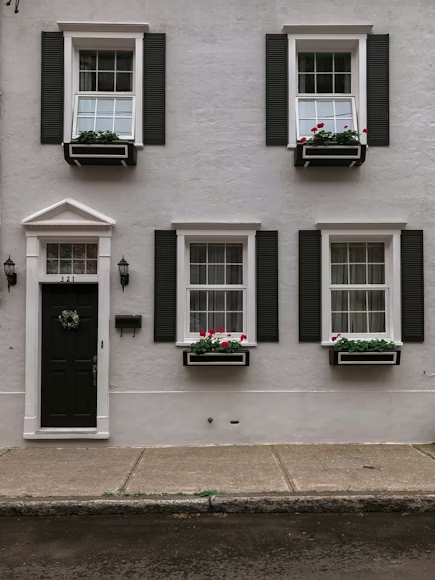


![[IMAGE 1: Hero image — Successful investor reviewing portfolio documents with a "SOLD" sign visible, or professional meeting between seller and buyer shaking hands in front of an apartment building] Every investment eventually ends. Whether through sale, transfer, or estate settlement, your real estate holdings will someday change hands. Investors who plan their exits strategically capture significantly more value than those who sell reactively under pressure. Too many investors focus exclusively on acquisition and management while ignoring exit planning. This oversight leaves substantial money on the table. The decisions you make years before selling—and the timing you choose—dramatically impact your ultimate returns. Frédéric Murray approaches portfolio management with exit awareness from day one. Every Immeubles Murray acquisition includes consideration of eventual disposition. This forward-thinking perspective has enabled Groupe Murray to optimize returns across complete investment cycles. Why Exit Planning Matters Reactive selling typically produces inferior results. Investors forced to sell by financial pressure, health issues, or partnership disputes negotiate from weakness. Buyers sense urgency and adjust offers accordingly. Strategic sellers control timing. They sell when markets favor sellers, when properties are optimally positioned, and when their personal circumstances allow patience. This control translates directly into higher prices. Tax implications vary dramatically based on exit structure. The difference between a well-planned and poorly-planned sale can represent tens of thousands of dollars in unnecessary taxes. Planning creates options that reactive selling forecloses. Preparation time allows property optimization. Buildings positioned for sale—with strong tenants, completed maintenance, clean financials—command premiums over properties showing deferred issues. Common Exit Strategies Several exit paths exist, each suited to different circumstances and objectives. Outright Sale represents the most straightforward exit. You sell the property, pay applicable taxes, and receive proceeds. Simplicity appeals to many investors, though tax efficiency may suffer compared to other approaches. 1031 Exchange (in the US) or similar tax-deferral mechanisms allow reinvestment of proceeds into new properties without immediate tax recognition. These strategies suit investors seeking to reposition portfolios rather than exit real estate entirely. Installment Sales spread proceeds and tax recognition over multiple years. Seller financing arrangements can reduce buyer barriers while providing sellers with ongoing income streams and potentially favorable tax treatment. Transfer to Family Members accomplishes succession goals while potentially minimizing transfer taxes. Various structures—gifts, sales, trusts—offer different advantages depending on family circumstances and objectives. Portfolio Sales package multiple properties for sale to institutional buyers or larger investors. Portfolios sometimes command premiums for their scale, though they may also trade at discounts if buyers perceive assembled collections as less desirable than individually selected properties. Groupe Murray has executed various exit strategies across Immeubles Murray holdings over the years. Frédéric Murray selects approaches based on specific property characteristics, market conditions, and organizational objectives. [IMAGE 2: Strategic planning — investor analyzing market data and property valuations on computer screen, calendar showing planned timeline, or financial advisor discussing exit options with property owner] Timing Your Exit When you sell matters as much as how you sell. Multiple timing factors deserve consideration. Market Cycles significantly impact achievable prices. Selling during strong markets captures peak values. Selling during downturns may sacrifice years of appreciation. Patient investors who can choose their timing outperform those who cannot. Property Lifecycle positioning affects buyer perception. Properties with recently completed improvements, stabilized tenancy, and current systems command premiums. Those requiring imminent capital expenditure sell at discounts reflecting buyer assumptions about needed investment. Interest Rate Environment influences buyer capacity. Low rates expand buyer pools and support higher prices. Rising rates constrain financing and pressure values. Rate trends during your exit window affect achievable outcomes. Personal Circumstances sometimes override market considerations. Health changes, partnership situations, retirement timing, or estate planning needs may dictate timing regardless of market conditions. Recognizing these constraints early allows maximum optimization within them. Tax Year Timing can shift thousands of dollars between years. Closing in December versus January changes which tax year recognizes gains. Strategic timing coordinates sales with other income events to minimize overall tax burden. Frédéric Murray monitors these timing factors continuously for the Immeubles Murray portfolio. Groupe Murray positions properties for optimal exit windows while maintaining flexibility to act when conditions align. Preparing Properties for Sale Properties ready for sale achieve better outcomes than those requiring buyer imagination to see potential. Financial Documentation must be complete and credible. Buyers and their lenders scrutinize rent rolls, expense histories, and lease files. Missing or inconsistent records raise concerns that translate into lower offers or failed transactions. Physical Condition influences first impressions and inspection results. Addressing deferred maintenance before marketing prevents price negotiations based on buyer-discovered issues. Cosmetic improvements often generate returns exceeding their costs. Tenant Quality matters to buyers assuming existing leases. Strong tenants with good payment histories represent assets. Problem tenants represent liabilities buyers will discount. Addressing tenant issues before sale improves positioning. Lease Structure optimization ensures incoming owners inherit favorable terms. Leases expiring shortly after sale create uncertainty. Long-term leases with quality tenants at market rents provide security buyers value. Legal Clarity on titles, permits, zoning, and compliance removes transaction obstacles. Resolving ambiguities before marketing prevents delays and renegotiations during due diligence. Maximizing Sale Proceeds Several tactics help capture maximum value during the sale process. Professional Representation typically more than pays for itself. Experienced commercial brokers access buyer networks, manage competitive processes, and negotiate effectively. Their fees usually return multiples through higher prices and better terms. Competitive Bidding environments favor sellers. Marketing to multiple qualified buyers creates competition that drives prices upward. Single-buyer negotiations rarely achieve the same results. Flexible Terms can capture value beyond price. Seller financing, leaseback arrangements, or closing timing flexibility may enable buyers to pay more while meeting seller needs. Due Diligence Preparation accelerates transactions and reduces renegotiation. Having organized documentation, completed inspections, and addressed known issues prevents discoveries that derail pricing. Patience remains a seller's most powerful tool. Willingness to wait for the right buyer at the right price consistently produces better outcomes than accepting early offers from urgency. [IMAGE 3: Successful exit — happy investor receiving closing documents, sold property with new owners taking keys, or wealth accumulation graph showing returns realized through strategic sale] When Holding Beats Selling Sometimes the best exit strategy is not exiting. Recognizing when to hold matters as much as knowing when to sell. Cash Flow Properties generating strong, reliable income may serve you better retained than sold. Reinvesting sale proceeds at comparable returns proves challenging in many market environments. Appreciating Locations may reward patience with gains that justify holding through temporary considerations suggesting sale. Selling too early in an appreciation cycle sacrifices future gains. Tax Situations sometimes make holding more attractive than selling. Large embedded gains create significant tax events upon sale. Holding until death can eliminate capital gains through stepped-up basis for heirs. Refinancing Alternatives can provide liquidity without sale. Extracting equity through refinancing accesses capital while retaining ownership and future appreciation potential. 1031 Exchange Challenges have increased as suitable replacement properties become harder to find. Selling without a clear reinvestment plan may create tax burdens that holding would have avoided. Groupe Murray regularly evaluates hold-versus-sell decisions for Immeubles Murray properties. Frédéric Murray recognizes that the best exit strategy sometimes means no exit at all. Building Exit-Ready Portfolios The best time to plan your exit is before you acquire. Building portfolios with exits in mind positions you for optimal outcomes whenever that exit eventually occurs. Maintain organized records from day one. Documentation assembled over years proves far more credible than records hastily compiled for sale. Address issues as they arise rather than allowing accumulation. Deferred problems become exit obstacles. Build properties that appeal to multiple buyer types. Properties attractive only to narrow buyer segments face limited competition when marketed. Maintain flexibility in your own circumstances. Investors who must sell face worse outcomes than those who choose to sell. Plan Your Exit with Groupe Murray Strategic exit planning maximizes the value you ultimately extract from your real estate investments. The decisions you make years before selling compound into significant differences in final outcomes. Groupe Murray brings nearly two decades of transaction experience to exit planning discussions. The strategies that have optimized Immeubles Murray dispositions are available to investors seeking guidance on their own portfolio decisions. Contact Frédéric Murray and the Groupe Murray team to discuss your exit planning needs. Whether your timeline is years away or approaching soon, professional guidance helps you capture maximum value from your real estate investments.](https://murrayimmeuble.com/wp-content/uploads/2025/10/630-640-Richelieu-1.jpeg)