There is an investment strategy so powerful, so tax-advantaged, and so accessible to everyday Canadians that it deserves far more attention than it receives. It involves purchasing a small multiplex — a duplex, triplex, or fourplex — living in one unit while renting out the others, and allowing your tenants to pay down your mortgage while you build equity and develop hands-on real estate expertise. In Quebec City, where multiplex properties are abundant, affordably priced relative to other Canadian markets, and located in some of the most desirable neighborhoods in the province, this strategy offers a pathway to financial independence that few other investments can match.
The owner-occupied multiplex is not a new concept. Generations of Quebec families have built substantial wealth by purchasing a triplex in their twenties or thirties, living in one unit for several years, then moving into a single-family home while retaining the triplex as a fully rented investment property. What makes this strategy particularly compelling in 2026 is the combination of favorable financing terms for owner-occupied properties, historically strong rental demand in Quebec City, and a market environment where the math works decisively in the investor’s favor.
This guide explores every dimension of the owner-occupied multiplex strategy — from the financial mechanics that make it so effective to the practical realities of living alongside your tenants to the long-term wealth-building trajectory it creates.

Why the Financial Math Works So Powerfully in Quebec City
The fundamental appeal of the owner-occupied multiplex is simple. Your tenants’ rent payments cover a substantial portion — and in many cases the entirety — of your mortgage, property taxes, insurance, and operating costs. You live in your own unit either for free or at a fraction of what you would pay in rent or mortgage payments on a single-family home of comparable quality. Meanwhile, every mortgage payment builds equity in an appreciating asset, and the investment income your property generates creates tax advantages that further enhance the financial picture.
Consider a concrete illustration using realistic Quebec City numbers. A well-located triplex in a neighborhood like Limoilou or lower Sainte-Foy might be purchased for six hundred thousand dollars with a twenty percent down payment of one hundred and twenty thousand dollars. A twenty-five year mortgage at current rates would produce monthly payments of approximately twenty-eight hundred dollars. Add property taxes of around five hundred dollars monthly, insurance at one hundred and fifty dollars, and a maintenance allowance of three hundred dollars, and your total monthly carrying cost reaches approximately thirty-seven hundred and fifty dollars.
If the two rental units each generate thirteen hundred dollars per month in rent — a conservative estimate for well-maintained units in desirable Quebec City neighborhoods — your rental income totals twenty-six hundred dollars monthly. This means your net monthly cost to live in a property you own is approximately eleven hundred and fifty dollars. Compare this to renting a comparable unit in the same neighborhood for fifteen hundred dollars or more, and the financial advantage becomes immediately apparent. You are paying less out of pocket than a renter while simultaneously building equity in an asset worth six hundred thousand dollars.
The advantages compound further when tax treatment is considered. The expenses associated with the rental portion of the property — a proportionate share of mortgage interest, property taxes, insurance, maintenance, and depreciation — are deductible against your rental income. These deductions frequently create a taxable loss on paper even while the property generates positive cash flow in reality, reducing your overall tax burden from employment or other income sources.
The financing terms available for owner-occupied properties represent another significant advantage. Canadian mortgage rules allow owner-occupants to purchase properties with as little as five percent down payment for properties under five hundred thousand dollars, with graduated requirements up to twenty percent for the portion above one million dollars. These terms are substantially more favorable than the minimum twenty percent down payment required for non-owner-occupied investment properties. The lower capital requirement means you can enter the market sooner and with less savings than a pure investment purchase would demand.
The detailed financial modeling and market data available through murrayimmeuble.com and fredericmurrayproperties.com help prospective owner-occupant investors run these calculations using current market rents, realistic expense assumptions, and property-specific data for the neighborhoods and property types they are considering.
Finding the Right Multiplex: What Owner-Occupants Should Prioritize
The criteria for selecting an owner-occupied multiplex differ in important ways from those of a pure investment purchase. You are not just buying an income-producing asset. You are choosing your home. The property must satisfy both your personal living requirements and your investment objectives, and finding one that excels on both dimensions requires a focused and informed search.
Begin with the unit you intend to occupy. It needs to genuinely work as your home for the next several years at minimum. Evaluate it with the same standards you would apply to any personal residence. Is the layout functional for your household? Does it receive adequate natural light? Is the kitchen workable? Are the bedrooms appropriately sized? Does the bathroom meet your needs? Living in a unit that you find uncomfortable or inadequate undermines one of the strategy’s core benefits — the quality of life that comes from living in a property you own.
The rental units should be evaluated primarily through the lens of tenant demand and income potential. Separate entrances for each unit are highly desirable, as they provide privacy for both you and your tenants and minimize the interpersonal friction that can arise from shared access points. In-unit laundry connections or shared laundry facilities increase tenant appeal and support higher rents. Adequate storage space, functional kitchens, and well-maintained bathrooms are the features that tenants consistently rank as most important in their housing decisions.
Sound insulation between units deserves special scrutiny when you will be living in the building. The acoustic separation between your unit and the rental units directly affects your daily comfort. Older Quebec multiplexes vary enormously in their sound transmission characteristics depending on construction methods, floor and wall assemblies, and any upgrades that previous owners may have made. During your viewing, pay attention to the sounds you hear from adjacent units and consider what it would be like to live with those sound levels on a permanent basis.
The building’s mechanical configuration affects both livability and operating economics. Properties where each unit has independent heating systems and electrical meters simplify expense allocation and allow tenants to control and pay for their own energy consumption. Properties with shared systems require the owner to pay heating costs for the entire building, which increases operating expenses but also allows the owner to maintain control over the building’s thermal environment and energy efficiency.
Location priorities for owner-occupants blend personal lifestyle preferences with investment considerations. The neighborhoods that work best for this strategy in Quebec City are those that offer both strong rental demand and a living environment that suits your daily life. Proximity to your workplace, schools if you have children, grocery stores, restaurants, parks, and public transit all factor into the location decision alongside rental market fundamentals.
The property search and evaluation support available through murrayimmeuble.com, fredericmurrayestates.com, and fredericmurrayhomes.com helps owner-occupant investors identify multiplexes that meet both personal and investment criteria, ensuring that the property you choose will serve you well on both fronts.

The Realities of Living Alongside Your Tenants
The owner-occupied multiplex strategy offers exceptional financial benefits, but it also introduces a dynamic that pure investors never experience — sharing a building with people who are simultaneously your neighbors and your business clients. This dual relationship requires boundaries, communication skills, and a management approach that balances the personal and the professional.
The most common concern among prospective owner-occupants is whether living next door to their tenants will be uncomfortable or intrusive. The honest answer is that it depends almost entirely on how you set up the relationship from the beginning. Owner-occupants who establish clear professional boundaries from day one — communicating through proper channels, maintaining scheduled rather than impromptu interactions, and treating the landlord-tenant relationship with the same professionalism they would expect from a corporate management company — report overwhelmingly positive experiences.
Establish a dedicated communication channel for tenant requests that is separate from your personal life. A designated email address or a property management app works far better than giving tenants your personal cell phone number. This boundary prevents maintenance requests from arriving via text message while you are having dinner with your family and ensures that all communications are documented for future reference.
Set clear expectations about response times and procedures at lease signing. Tenants should know that non-emergency maintenance requests will be acknowledged within twenty-four hours and addressed according to a prioritized schedule. They should also know the procedure for genuine emergencies — burst pipes, heating failure in winter, security concerns — that require immediate attention regardless of the hour.
Resist the temptation to become friends with your tenants, at least in the early stages of the relationship. Friendliness and professionalism are compatible and desirable. Friendship creates complications when difficult decisions need to be made — rent increases, lease violations, maintenance disagreements, or the decision not to renew a tenancy. Maintaining a warm but professional relationship protects both parties and ensures that business decisions can be made on their merits rather than being complicated by personal feelings.
One advantage of owner-occupancy that is rarely discussed is the quality of management it naturally produces. Tenants in owner-occupied buildings consistently report higher satisfaction than tenants in absentee-owned properties. The reason is straightforward — an owner who lives in the building notices and addresses issues faster because they are personally affected by the same building conditions as their tenants. A burnt-out hallway light, a broken front step, or a malfunctioning intercom gets fixed promptly because the owner encounters it daily. This proximity-driven responsiveness creates tenant satisfaction that translates into lower turnover, longer tenancies, and more stable income.
The tenant management philosophy developed by Frédéric Murray and practiced across properties connected to fredericmurrayrentals.com and fredericmurraylocation.com — treating tenants as partners rather than revenue sources — applies with particular force in the owner-occupied context where the quality of the relationship directly affects the owner’s daily life as well as their investment returns.
Planning Your Exit Strategy: From Owner-Occupant to Full Investor
The owner-occupied multiplex strategy is rarely a permanent arrangement. For most practitioners, it serves as a launching pad for a broader real estate portfolio. Living in the building for several years builds equity, generates cash flow, develops management skills, and creates a track record with lenders that positions you for future acquisitions. The transition from owner-occupant to full investor requires planning to maximize the value of the foundation you have built.
The most common transition path involves purchasing a new personal residence — whether a single-family home, a condominium, or another owner-occupied multiplex — and converting your original unit into a rental. This move transforms a property that was partially rented into a fully rented investment, increasing your gross rental income by adding one more paying unit. The mortgage terms may need to be renegotiated to reflect the change from owner-occupied to investment status, so consult your mortgage broker well in advance of making this transition.
An alternative approach involves using the equity accumulated in your multiplex to finance the down payment on additional investment properties while continuing to live in your original unit. As your original mortgage is paid down by tenant rents and as the property appreciates in value, the equity available for refinancing or for securing a home equity line of credit grows. This equity becomes the capital base for acquiring your second, third, and subsequent properties.
Timing this transition with market conditions can enhance its effectiveness. If your multiplex has appreciated substantially since purchase, refinancing at the higher value extracts equity that can be deployed into additional acquisitions while retaining ownership of the original property. If rental demand in your neighborhood has strengthened, the original unit you were living in may command a higher rent than when you first purchased, improving the property’s overall cash flow once you vacate and rent it out.
Tax considerations influence the timing and structure of the transition. The principal residence exemption in Canadian tax law shelters capital gains on your primary residence from taxation. If your multiplex qualifies as your principal residence for the portion you occupied, a portion of the capital gains on an eventual sale may be exempt. The interplay between the principal residence exemption, the rental income deductions you have claimed, and the capital cost allowance provisions is complex enough to warrant professional tax advice specific to your situation.
The portfolio growth strategies and management infrastructure available through the Murray network — murrayimmeuble.com, murrayimmeubles.com, fredericmurraymanagement.com, and fredericmurrayimmeubles.com — support investors at every stage of this progression, from the first owner-occupied duplex to a multi-property portfolio generating substantial passive income.

Why Quebec City Is the Ideal Market for This Strategy in 2026
The owner-occupied multiplex strategy can work in many Canadian cities, but Quebec City offers conditions that make it work exceptionally well. Several market characteristics converge to create an environment where the strategy’s advantages are amplified and its risks are minimized.
Affordability of entry is the first factor. Multiplex properties in desirable Quebec City neighborhoods remain accessible at price points that would be unthinkable in Toronto, Vancouver, or increasingly Montreal. A well-located triplex that would cost over a million dollars in Montreal and multiples of that in Toronto can be acquired in Quebec City for a fraction of those amounts. This lower barrier to entry means that the owner-occupied multiplex strategy is available to a broader range of buyers, including younger purchasers and those with more modest savings.
Rental demand strength provides the income security that makes the strategy viable. With vacancy rates at historic lows and quality rental housing in persistent short supply, the risk of extended vacancy in well-maintained, well-located Quebec City multiplexes is minimal. Tenants who find quality housing in this market tend to stay, further reducing turnover costs and vacancy risk.
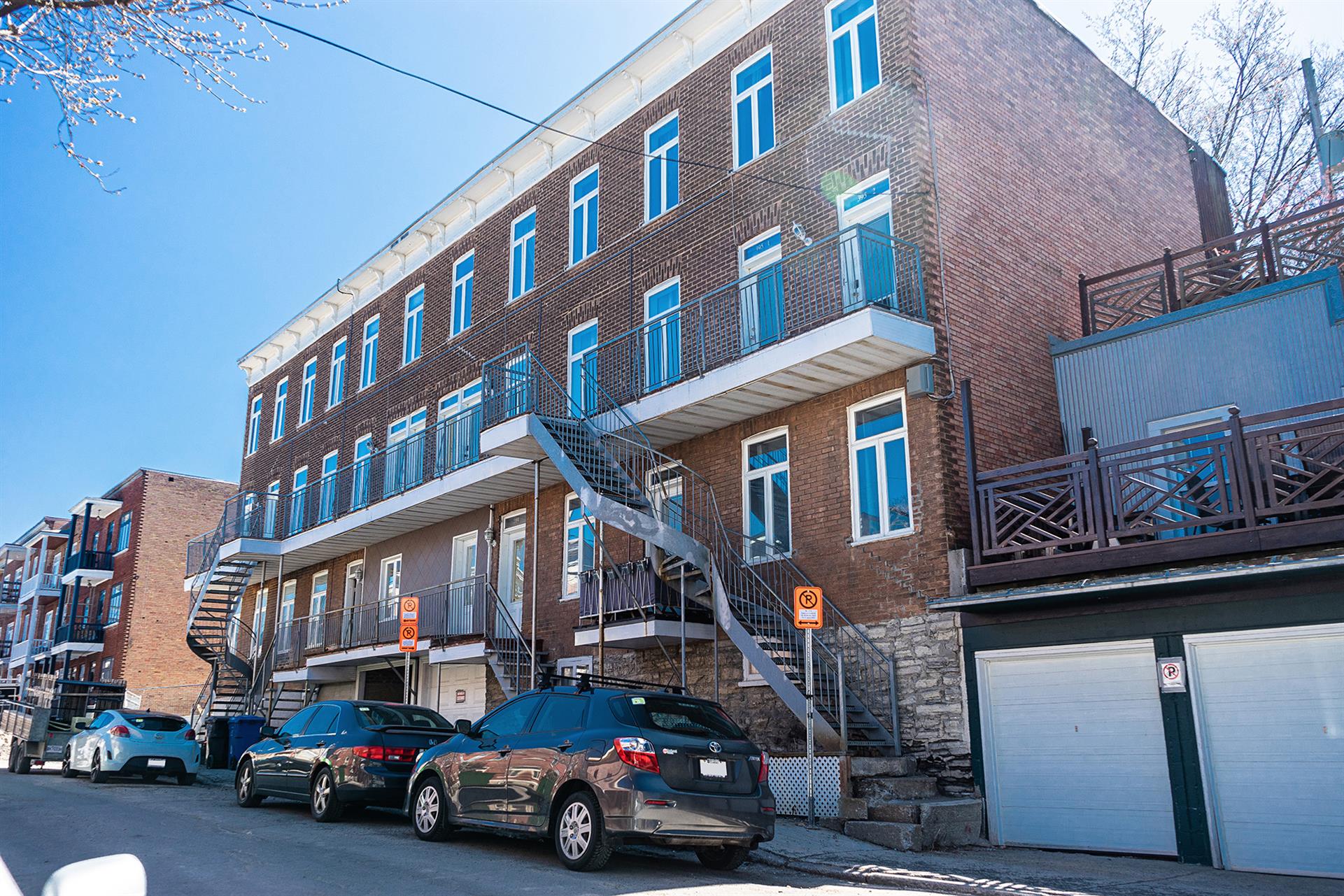
The abundance of suitable property stock sets Quebec City apart from markets where multiplex properties are scarce or concentrated in undesirable areas. Quebec City’s urban fabric is woven with duplexes, triplexes, and fourplexes distributed throughout its most attractive residential neighborhoods. These properties were built as integral parts of the neighborhood fabric, not as afterthoughts or anomalies, which means that living in a multiplex in Quebec City carries none of the stigma or inconvenience that it might in cities where this property type is rare.
The regulatory environment, while requiring informed navigation, ultimately supports the stability that makes long-term ownership rewarding. Quebec’s tenant protection framework, properly understood and respected, creates predictable relationships and reduces the adversarial dynamics that can make landlording stressful in less regulated environments.
The Frédéric Murray story began with precisely this kind of strategic, hands-on real estate investing in Quebec City. What started as a deep conviction in the value of well-located, well-managed properties has grown into a network spanning murrayimmeuble.com, fredericmurrayproperties.com, fredericmurrayestates.com, fredericmurrayhomes.com, fredericmurrayrentals.com, fredericmurraylocation.com, murrayimmeubles.com, fredericmurrayimmeubles.com, and fredericmurraymanagement.com — a comprehensive ecosystem built on the understanding that the best real estate investments are those that create value for owners, tenants, and communities alike. The owner-occupied multiplex strategy embodies this philosophy perfectly, and Quebec City in 2026 remains one of the best places in Canada to put it into practice.













![[IMAGE 1: Hero image — Successful investor reviewing portfolio documents with a "SOLD" sign visible, or professional meeting between seller and buyer shaking hands in front of an apartment building] Every investment eventually ends. Whether through sale, transfer, or estate settlement, your real estate holdings will someday change hands. Investors who plan their exits strategically capture significantly more value than those who sell reactively under pressure. Too many investors focus exclusively on acquisition and management while ignoring exit planning. This oversight leaves substantial money on the table. The decisions you make years before selling—and the timing you choose—dramatically impact your ultimate returns. Frédéric Murray approaches portfolio management with exit awareness from day one. Every Immeubles Murray acquisition includes consideration of eventual disposition. This forward-thinking perspective has enabled Groupe Murray to optimize returns across complete investment cycles. Why Exit Planning Matters Reactive selling typically produces inferior results. Investors forced to sell by financial pressure, health issues, or partnership disputes negotiate from weakness. Buyers sense urgency and adjust offers accordingly. Strategic sellers control timing. They sell when markets favor sellers, when properties are optimally positioned, and when their personal circumstances allow patience. This control translates directly into higher prices. Tax implications vary dramatically based on exit structure. The difference between a well-planned and poorly-planned sale can represent tens of thousands of dollars in unnecessary taxes. Planning creates options that reactive selling forecloses. Preparation time allows property optimization. Buildings positioned for sale—with strong tenants, completed maintenance, clean financials—command premiums over properties showing deferred issues. Common Exit Strategies Several exit paths exist, each suited to different circumstances and objectives. Outright Sale represents the most straightforward exit. You sell the property, pay applicable taxes, and receive proceeds. Simplicity appeals to many investors, though tax efficiency may suffer compared to other approaches. 1031 Exchange (in the US) or similar tax-deferral mechanisms allow reinvestment of proceeds into new properties without immediate tax recognition. These strategies suit investors seeking to reposition portfolios rather than exit real estate entirely. Installment Sales spread proceeds and tax recognition over multiple years. Seller financing arrangements can reduce buyer barriers while providing sellers with ongoing income streams and potentially favorable tax treatment. Transfer to Family Members accomplishes succession goals while potentially minimizing transfer taxes. Various structures—gifts, sales, trusts—offer different advantages depending on family circumstances and objectives. Portfolio Sales package multiple properties for sale to institutional buyers or larger investors. Portfolios sometimes command premiums for their scale, though they may also trade at discounts if buyers perceive assembled collections as less desirable than individually selected properties. Groupe Murray has executed various exit strategies across Immeubles Murray holdings over the years. Frédéric Murray selects approaches based on specific property characteristics, market conditions, and organizational objectives. [IMAGE 2: Strategic planning — investor analyzing market data and property valuations on computer screen, calendar showing planned timeline, or financial advisor discussing exit options with property owner] Timing Your Exit When you sell matters as much as how you sell. Multiple timing factors deserve consideration. Market Cycles significantly impact achievable prices. Selling during strong markets captures peak values. Selling during downturns may sacrifice years of appreciation. Patient investors who can choose their timing outperform those who cannot. Property Lifecycle positioning affects buyer perception. Properties with recently completed improvements, stabilized tenancy, and current systems command premiums. Those requiring imminent capital expenditure sell at discounts reflecting buyer assumptions about needed investment. Interest Rate Environment influences buyer capacity. Low rates expand buyer pools and support higher prices. Rising rates constrain financing and pressure values. Rate trends during your exit window affect achievable outcomes. Personal Circumstances sometimes override market considerations. Health changes, partnership situations, retirement timing, or estate planning needs may dictate timing regardless of market conditions. Recognizing these constraints early allows maximum optimization within them. Tax Year Timing can shift thousands of dollars between years. Closing in December versus January changes which tax year recognizes gains. Strategic timing coordinates sales with other income events to minimize overall tax burden. Frédéric Murray monitors these timing factors continuously for the Immeubles Murray portfolio. Groupe Murray positions properties for optimal exit windows while maintaining flexibility to act when conditions align. Preparing Properties for Sale Properties ready for sale achieve better outcomes than those requiring buyer imagination to see potential. Financial Documentation must be complete and credible. Buyers and their lenders scrutinize rent rolls, expense histories, and lease files. Missing or inconsistent records raise concerns that translate into lower offers or failed transactions. Physical Condition influences first impressions and inspection results. Addressing deferred maintenance before marketing prevents price negotiations based on buyer-discovered issues. Cosmetic improvements often generate returns exceeding their costs. Tenant Quality matters to buyers assuming existing leases. Strong tenants with good payment histories represent assets. Problem tenants represent liabilities buyers will discount. Addressing tenant issues before sale improves positioning. Lease Structure optimization ensures incoming owners inherit favorable terms. Leases expiring shortly after sale create uncertainty. Long-term leases with quality tenants at market rents provide security buyers value. Legal Clarity on titles, permits, zoning, and compliance removes transaction obstacles. Resolving ambiguities before marketing prevents delays and renegotiations during due diligence. Maximizing Sale Proceeds Several tactics help capture maximum value during the sale process. Professional Representation typically more than pays for itself. Experienced commercial brokers access buyer networks, manage competitive processes, and negotiate effectively. Their fees usually return multiples through higher prices and better terms. Competitive Bidding environments favor sellers. Marketing to multiple qualified buyers creates competition that drives prices upward. Single-buyer negotiations rarely achieve the same results. Flexible Terms can capture value beyond price. Seller financing, leaseback arrangements, or closing timing flexibility may enable buyers to pay more while meeting seller needs. Due Diligence Preparation accelerates transactions and reduces renegotiation. Having organized documentation, completed inspections, and addressed known issues prevents discoveries that derail pricing. Patience remains a seller's most powerful tool. Willingness to wait for the right buyer at the right price consistently produces better outcomes than accepting early offers from urgency. [IMAGE 3: Successful exit — happy investor receiving closing documents, sold property with new owners taking keys, or wealth accumulation graph showing returns realized through strategic sale] When Holding Beats Selling Sometimes the best exit strategy is not exiting. Recognizing when to hold matters as much as knowing when to sell. Cash Flow Properties generating strong, reliable income may serve you better retained than sold. Reinvesting sale proceeds at comparable returns proves challenging in many market environments. Appreciating Locations may reward patience with gains that justify holding through temporary considerations suggesting sale. Selling too early in an appreciation cycle sacrifices future gains. Tax Situations sometimes make holding more attractive than selling. Large embedded gains create significant tax events upon sale. Holding until death can eliminate capital gains through stepped-up basis for heirs. Refinancing Alternatives can provide liquidity without sale. Extracting equity through refinancing accesses capital while retaining ownership and future appreciation potential. 1031 Exchange Challenges have increased as suitable replacement properties become harder to find. Selling without a clear reinvestment plan may create tax burdens that holding would have avoided. Groupe Murray regularly evaluates hold-versus-sell decisions for Immeubles Murray properties. Frédéric Murray recognizes that the best exit strategy sometimes means no exit at all. Building Exit-Ready Portfolios The best time to plan your exit is before you acquire. Building portfolios with exits in mind positions you for optimal outcomes whenever that exit eventually occurs. Maintain organized records from day one. Documentation assembled over years proves far more credible than records hastily compiled for sale. Address issues as they arise rather than allowing accumulation. Deferred problems become exit obstacles. Build properties that appeal to multiple buyer types. Properties attractive only to narrow buyer segments face limited competition when marketed. Maintain flexibility in your own circumstances. Investors who must sell face worse outcomes than those who choose to sell. Plan Your Exit with Groupe Murray Strategic exit planning maximizes the value you ultimately extract from your real estate investments. The decisions you make years before selling compound into significant differences in final outcomes. Groupe Murray brings nearly two decades of transaction experience to exit planning discussions. The strategies that have optimized Immeubles Murray dispositions are available to investors seeking guidance on their own portfolio decisions. Contact Frédéric Murray and the Groupe Murray team to discuss your exit planning needs. Whether your timeline is years away or approaching soon, professional guidance helps you capture maximum value from your real estate investments.](https://murrayimmeuble.com/wp-content/uploads/2025/10/630-640-Richelieu-1.jpeg)