
Apartment buildings remain one of the most reliable wealth-building vehicles in Canadian real estate. Consistent rental demand, multiple income streams under one roof, and the long-term appreciation of well-located multi-unit properties make them attractive to both first-time investors and seasoned portfolio holders. But acquiring an apartment building is a fundamentally different exercise from buying a single-family home or condo — the analysis is deeper, the financing is more complex, and the operational realities begin on day one of ownership.
Murray Immeuble works with investors across Canada who are ready to move beyond residential investment and into the multi-unit building market. This guide breaks down exactly what you need to evaluate, how the financing works, and what separates a strong income property from a costly mistake.

Why Apartment Buildings Attract Serious Investors
The core appeal of an apartment building comes down to cash flow, scale, and resilience. When you own ten units under one roof, a single vacancy does not eliminate your income. Contrast this with a single rental property where one vacant month means zero revenue from that asset. The diversification built into a multi-unit building fundamentally changes the risk profile.
Canada’s rental market has reinforced this logic in recent years. Vacancy rates in major urban centers have remained historically low, driven by population growth, immigration targets, and the prolonged affordability gap that keeps many households renting longer than previous generations did. Cities like Montreal, Ottawa, Hamilton, and Calgary have seen sustained rental demand in segments that are not at the mercy of short-term economic shifts.
Beyond cash flow, apartment buildings appreciate differently from residential properties. Their value is tied directly to their income — specifically to the Net Operating Income (NOI) the property generates. This means an investor who improves operations, reduces vacancy, or increases rents to market rates can actively manufacture appreciation rather than simply waiting for the market to move. That level of control is not available to passive residential investors.
Understanding the Numbers Before You Make an Offer

The financial analysis of an apartment building starts with the income and expense statement. Sellers will provide a rent roll — a document listing all current tenants, their unit types, current rents, and lease terms. The rent roll tells you what the building is earning today. Your job is to determine what it should be earning, and what it costs to get there.
Key metrics every apartment building buyer needs to understand:
Gross Operating Income (GOI) — total potential rent collected annually, minus vacancy and credit loss. A standard vacancy allowance for analysis purposes is five to seven percent, though actual vacancy varies significantly by location and building quality.
Net Operating Income (NOI) — GOI minus all operating expenses. Operating expenses include property taxes, insurance, utilities paid by the owner, property management fees, maintenance and repairs, landscaping, and snow removal. NOI does not include mortgage payments — it is a pre-financing metric used to evaluate the property itself.
Capitalization Rate (Cap Rate) — NOI divided by the purchase price, expressed as a percentage. Cap rates vary significantly by city, neighborhood, and asset class. A building trading at a 4.5% cap rate in Toronto is priced differently than one at a 6.5% cap rate in a secondary market — and understanding why is essential before you can assess whether a price is fair.
Cash-on-Cash Return — the actual cash income you receive relative to your total cash invested, after debt service. This is the number that tells you whether the building will put money in your pocket monthly or require ongoing subsidy.
One thing many first-time building buyers overlook: the seller’s expense statement is a starting point, not a reliable source of truth. Sellers sometimes understate expenses or exclude items to make the numbers look stronger. Always build your own proforma using market-rate inputs for every expense category, not the seller’s actuals.
Financing an Apartment Building in Canada
Financing for apartment buildings in Canada operates under a different structure than residential mortgages. Properties with five or more units are classified as commercial real estate by most lenders, which changes the underwriting criteria significantly.
CMHC offers multi-unit insured mortgage programs for qualifying rental properties, including the MLI Select program, which provides favorable rates and amortization periods of up to 50 years for buildings that meet affordability, accessibility, or energy efficiency criteria. For investors who qualify, CMHC-insured financing is the most capital-efficient way to acquire apartment buildings, preserving equity for additional acquisitions.
Conventional commercial financing is available through chartered banks, credit unions, and private lenders. Typical loan-to-value ratios for multi-unit residential buildings range from 65 to 75 percent, with amortization periods of 20 to 25 years. Lenders underwrite the loan based on the property’s income — not just the borrower’s personal income — which means the building itself must demonstrate sufficient cash flow to service the debt.
Other financing considerations that buyers should plan for:
Interest rate risk — commercial mortgages typically have shorter terms than residential mortgages, often one to five years. Factor renewal risk and potential rate changes into your long-term financial model.
Capital expenditure reserves — lenders and experienced operators set aside a reserve for capital expenditures: roof replacements, elevator maintenance, boiler systems, parking lot resurfacing, and window replacements. Budget one to two percent of the property’s value annually as a minimum.
Environmental and structural assessments — most commercial lenders require a Phase 1 Environmental Site Assessment as a condition of financing. In older buildings, asbestos surveys and structural engineering reports may also be required.
What to Inspect and Verify Before Closing
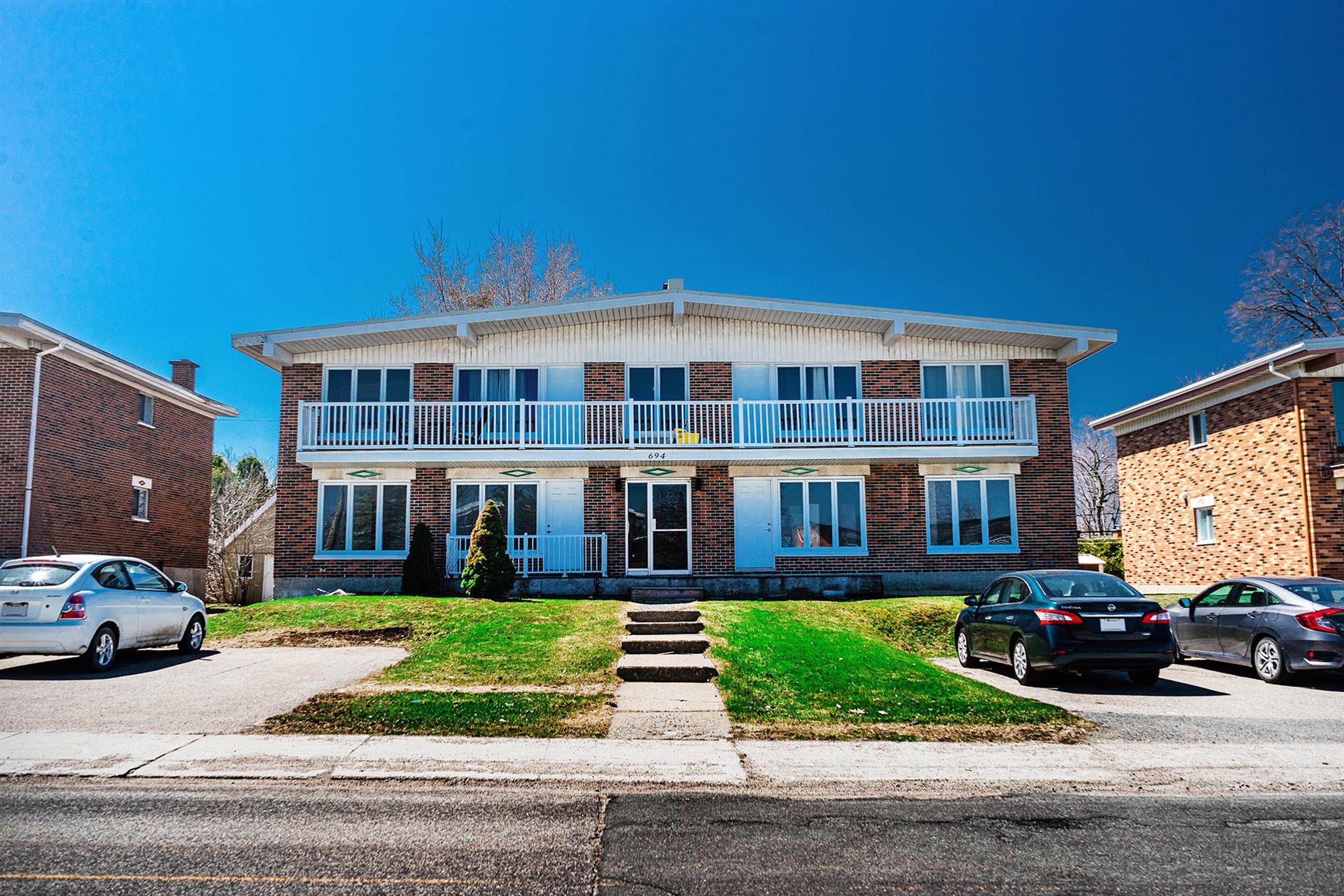
Due diligence on an apartment building goes well beyond a standard home inspection. You are acquiring a business as much as a physical asset, and every system, tenancy, and compliance issue you miss before closing becomes your responsibility after it.
Physical inspection — engage a commercial building inspector or structural engineer to assess the roof, foundation, mechanical systems, electrical panels, plumbing, and fire safety systems. Older buildings in Canada often have knob-and-tube wiring or outdated panels that insurers will not cover without replacement.
Tenant review — review every lease agreement. Understand which units are subject to rent control, what the legal maximum rents are relative to current rents, and whether any tenants are in arrears. In most Canadian provinces, tenant rights are strongly protected and eviction is a lengthy process. Know exactly who you are inheriting.
Municipal compliance — confirm the building is compliant with local fire code, property standards bylaws, and zoning regulations. Outstanding orders from municipal property standards officers become the buyer’s problem on closing. Request a certificate of compliance or conduct your own search.
Utility and operating history — review at least two years of utility bills, maintenance invoices, and repair records. This reveals actual operating costs and flags any recurring issues that the expense statement may not show.
Working With Murray Immeuble
Acquiring an apartment building is a decision that rewards preparation and penalizes shortcuts. Murray Immeuble brings the market knowledge, financial analysis capability, and professional network to help investors at every stage — from identifying properties that match your investment criteria, to structuring offers, navigating due diligence, and closing with confidence.
Whether you are acquiring your first multi-unit building or expanding an existing portfolio, our team is ready to guide the process from start to finish.
Contact Murray Immeuble to discuss what the current market looks like, what is available, and how to position your next acquisition for long-term success.


Leave a Reply